
I spent the morning staring at a rather uncomfortable juxtaposition.
On one screen: Bitcoin's elegant, unforgiving code. A network designed for absolute scarcity, for a supply cap that no human can negotiate. On the other screen: a headline about AI capital expenditure that could hit $800 billion in 2026, with some analysts predicting it will blow past $1 trillion.
One system is built on the immutable mathematics of limits. The other is engineering the most voracious appetite for compute since the dawn of the industrial age.
It's tempting to wave this off as the same old song-and-dance from the AI hype cycle. Microsoft is investing billions into data center capacity. Amazon and Alphabet are in a capex arms race that makes Cold War defense budgets look modest. OpenAI, backed by SoftBank, is chasing artificial general intelligence with an almost theological fervor.
You've heard it all before. In 1999, it was pet food sold over the internet. In 2017, it was ICO whitepapers that promised to decentralize everything. And now, it's neural networks that generate middle-management emails.
The similarities are there, sure. But so is a crucial difference: this time, the money is tied to physical infrastructure. Data centers are being built. GPUs are being shipped. Power plants are being re-commissioned to feed silicon brains.
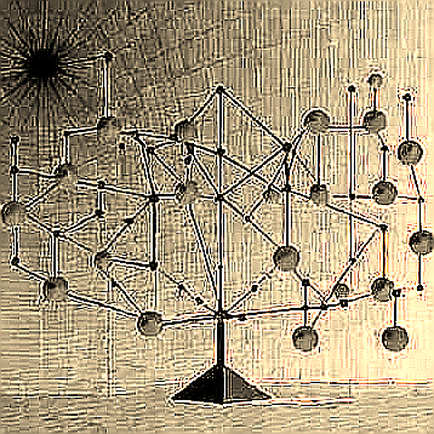
The real story isn't the $1 trillion. It's the concentration of power that come with building all that steel, silicon, and electricity in one place.
In 2017, I traveled to Zurich and Singapore to analyze over 50 ICO whitepapers. I was looking for the value proposition narratives. What I found was a graveyard of projects that mistook community memes for network security.
Now, in 2026, I see a parallel: hyperscale cloud providers are building the physical substrate of our digital future, but they've wrapped it in the same centralized architecture that gave us the surveillance economy. The “AI revolution” is being hosted on three or four massive server farms, owned by two or three tech giants, running on a legislative framework that's already a decade behind the technology.
This is the Centralization Paradox: the most transformative technology of our generation is being seeded on the least decentralized infrastructure possible.
Let's unpack the numbers. According to recent projections, AI capex is slated to hit $800 billion in 2026, with a realistic path toward $1 trillion. That's a 40-50% year-over-year growth rate that shows no signs of slowing.
The money is flowing into hyperscalers like Microsoft, Amazon, and Alphabet. They're building out data centers that consume as much electricity as small cities. They're ordering custom silicon to reduce reliance on NVIDIA (though NVIDIA still makes the lion's share of the profit). They're buying up land and water rights in regions where power is cheap.
To the traditional finance world, this is a clear signal: AI is here to stay, and the infrastructure buildout is the best risk-adjusted bet on the market. You see, Wall Street loves a good buildout. It's tangible. It's measurable. You can graph it, you can project the depreciation schedule, and you can build a valuation model on it.
But from my seat, through 29 years of observing this industry, I see something more nuanced. I see a massive bet on Sam Altman's deep-learning hypothesis, wrapped up in a cloud-dependent architecture that reintroduces single points of failure on a global scale.
It's not that the AI money is fake. It's that the directional stakes are getting out of sync.
There are three distinct camps in this battle for computational supremacy.
The first camp is the “commodity compute” providers. You can think of this as the hyperscaler play: Microsoft, Google, Amazon. They own the pipes, the data centers, and the supply chains. Their thesis is straightforward: everyone needs cloud compute, and we own the cloud.
This is the Industrial Revolution model. It's vertical integration at scale.
The second camp is the “AI-native” builders. These are the inference startups, the model developers, and the chip designers. They are fighting to create the best model, the largest training run, or the most efficient inference stack. They're not building data centers for the world; they're building brainpower and selling it by the token.
It's a glamorous race. It's a winner-take-all dynamic leveraging the network effects of proprietary data.
The third camp, and this is where my attention keeps drifting, is the “crypto-neutral infrastructure” play. We're seeing the same, tired pattern repeat: the market prices AI compute as a cloud utility, and it ignores the fact that we've seen this movie before, and we know how it ends.
We've seen it with the internet (AOL and CompuServe), with mobile (carrier walled gardens), and with social media (the centralized attention platforms). The first iteration always centralizes. The second iteration, which is where we are now, always decentralizes the fixed costs. AI capex is essentially the cost of running the first iteration.
It's a painful truth, but one that points to a contrarian opportunity.
The contrarian play isn't shorting NASDAQ or betting against NVIDIA. It's recognizing that the enormous energy and capital being poured into centralized AI is accidentally seeding the future of decentralized compute.
I've watched this dynamic unfold in the crypto space with Bitcoin mining. When the institutional money flowed into mining during the 2022 bear market, it forced a professionalization of the sector. The result was a massive buildout of electrical turbine capacity and grid-balancing technology. Today, those same miners are pivoting to AI inference because they have the power, the cooling, and the copper they already installed.
From the ashes of FUD, we forge true adoption.
Bitcoin miners are becoming the world's most undervalued AI infrastructure providers. They own land, they own power contracts, and they own enormous GPU clusters left over from the 2024 boom. When hyperscalers run into grid constraints or political roadblocks, these decentralized compute providers can swoop in and offer the exact same service at a fraction of the cost.
And at the protocol level, we're seeing the rise of “decentralized AI marketplaces.” These aren't Layer-2s that promise to unite AI and crypto with a nice logo. These are networks like Akash and Gensyn, which are building a bandwidth market that matches GPUs with users directly. They're architected to survive the centralization virus. They are the compressors to the hyperscaler's mainframe.
Meanwhile, the capital flows tell the story of a fork in the road. The “safe” money is heading to hyperscalers. The interesting money is heading to infrastructure that can carry the load when the hyperscalers hit their inevitable scalability wall.
Let's be clear: this isn't a zero-sum game. I'm not anti-AI. I've spent the last year beta-testing over ten new AI-agent protocols, documenting how smart contracts can enforce ethical AI behavior. My book, The Sovereign Algorithm, argues that blockchain provides the transparency rails that AI governance desperately needs.
But even I have to acknowledge the irony: the more money we throw at AI, the more we rely on the very architectures we're trying to escape.
We talk about “AI alignment,” but we've built the entire stack on misaligned incentives. The smallest companies being pushed off the cloud because of rising costs. The energy grids buckling under the load. The pressure on SMEs to surrender their proprietary data just to use an enterprise model.
In this specific cycle, the contrarian isn't just about technology; it's about industrial policy. The AI capex boom is simultaneously creating the demand for a decentralized supply side.
Volatility is the tax we pay for freedom.
So here's my takeaway, and it's not what you expect.
The $1 trillion is real. It will drive valuation growth. But don't get lost in the dazzling surface of that investment—don't assume that the hyperscalers are the only ones who will profit from the AI revolution. The true alpha will be found in the overlooked battleground of where the compute actually runs.
We build server farms, but do we architect ecosystems?

The most valuable investments are the ones that preserve optionality. The cloud providers are locking us into their proprietary stacks. The decentralized compute networks are providing an escape hatch.
The code is open, but the vision is ours to build.
We are about to witness a collision course—a $1 trillion worth of AI Capex standing directly in the path of a $1 trillion crypto-native infrastructure that refuses to die. The only question is: when the centralization bottleneck hits, which side are you mining for?
We do not follow trends; we architect ecosystems. And the most resilient ecosystem is the one that doesn't simply scale up, but scales out—distributing the load, the power, and the rewards across a network of nodes, not a fortress of data centers.